
Eugene Chai
If you have a furry companion, you know that pet stains are incredibly common. They’re also one of the easiest ways to permanently damage carpets if they’re handled the wrong way.
The tricky part is that “pet stains” is an umbrella term, as each kind of ‘stain’ behaves differently depending on what it’s made up of and how it got there. And what works on surface-level marks can fail completely if the mess has seeped into the underlay.
In this guide, we’ll walk through the most common types of pet stains, how to clean or remove them, which DIY approaches can help, and when you’re better off calling in a professional carpet cleaning service in Singapore.
Common Types of Pet Stains on Carpets
Carpet cleaning and maintenance begins with calm. Pause and identify what you’re dealing with, noting how deeply the stain penetrated and what it is. This will tell you what cleaning method has the best chance of working long-term.
Urine Stains
Urine is the classic “looks fine now, smells awful later” problem.
Carpet fibres might seem dry on the surface, but urine can soak through quickly into the carpet backing and underlay. That’s why even if you’ve cleaned the visible mark, the smell can linger or return the moment the weather gets humid or the air-con goes off.
Vomit Stains
Pet vomit is a mix of acids, partially digested food particles, and (unfortunately) odour. It can quickly stain carpets, especially light-coloured ones. Vomit also tends to spread if you rub it, pushing acidic residue deeper into fibres.
Faeces and Muddy Paw Marks
Faeces and muddy paw prints may seem easier to clean because they’re clearly visible, but they come with their own issues.
Solid stains often leave residue (even after you remove the bulk), and that residue can cling to fibres and cause odour, while mud stains are less about bacteria and more about fine particles getting trapped in the carpet pile.
Immediate Steps to Take When a Pet Accident Happens
How to clean pet stains on carpets reliably? The first thing to note is how quickly you got to it. The longer a stain sits, the more time it has to soak in, oxidise, and bond with fibres.
Here’s what to do as a first response:
- Blot, don’t rub. Press down with paper towels or a clean cloth to absorb as much liquid as possible. Rubbing spreads the mess and grinds it into fibres.
- Remove solids carefully. Use gloves and lift solids with a scraper or paper towel (don’t press down). If it’s vomit, lift the chunks first before tackling any residue.
- Avoid hot water. Heat can “set” protein-based stains (like vomit and faeces) and worsen odours in urine stains. Stick to cool or lukewarm water if you’re using water at all.
- Work from the outside in. This prevents the stain from expanding.
DIY Solutions for Pet Stain Removal
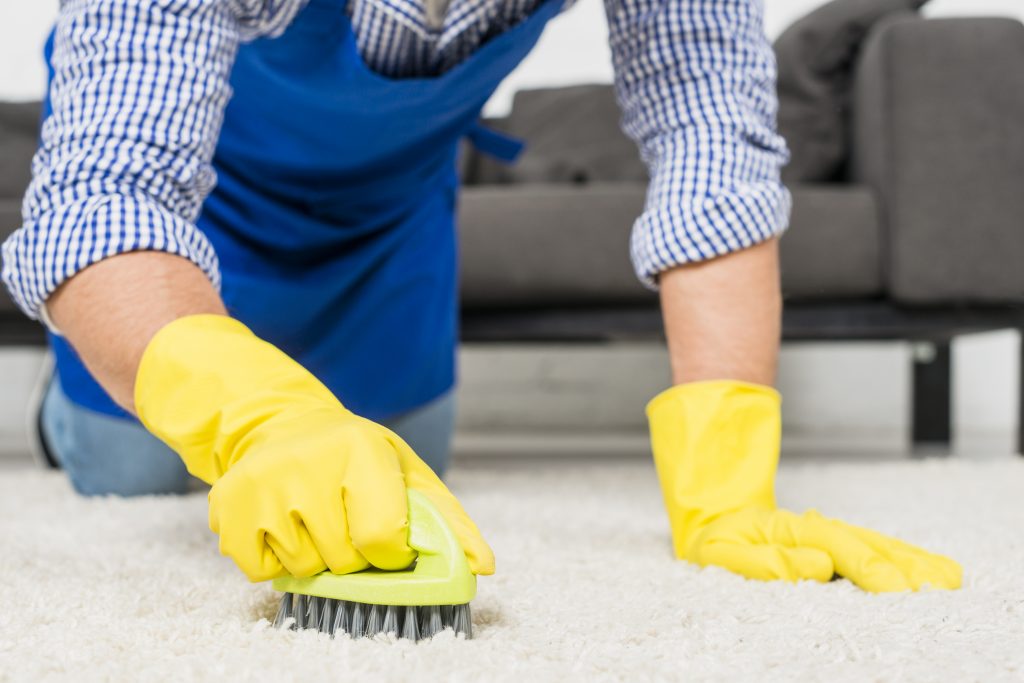
DIY methods can help address surface-level issues, especially for relatively mild accidents. Their main drawback is that they only tackle what’s visible. When it comes to how to clean dog or cat pee from floors, fabric couches and other places, you’ll find that the odour often has seeped into the carpet in a way no quick fabric fix can help with.
Here are common at-home options, and when they make sense.
White Vinegar and Water
White vinegar is popular because it helps neutralise odours and can break down some urine residue. Used correctly, it can be a useful “first line” option for fresh urine accidents. A typical approach is to apply a diluted vinegar-and-water mix lightly, then blot, but not drench.
Baking Soda
Baking soda is great for absorbing moisture and odour, especially after you’ve blotted up as much liquid as possible. Sprinkle lightly, let it sit long enough to do its job, then vacuum thoroughly.
Mild Dish Soap
For surface stains like muddy paw marks, a small amount of mild dish soap can help lift residue. Using too much soap leaves a sticky film that attracts dirt and can make the area look grimy again more quickly.
Enzyme-Based Cleaners
Enzyme cleaners are designed to remove organic stains such as urine and vomit. In Singapore, they’re often recommended when people ask how to clean pet vomit stains from carpet.
However, results depend heavily on whether the product reaches the affected depth, is used correctly, and if the area is kept at the right moisture level long enough. These make enzyme cleaners tricky to work with, so it may be better to call for rug cleaning in Singapore.
What to Avoid When Cleaning Pet Stains
This is where many well-meaning attempts go sideways, sometimes even damaging the carpet itself.
Avoid:
- Hot water, which can set stains and intensify odours.
- Steam from household machines, especially for urine stains.
- Harsh chemicals or bleach, which can discolour carpets and damage fibres.
- Aggressive scrubbing, which frays fibres, spreads stains, and can create fuzzy, worn patches.
If you’re specifically wondering about equipment, here’s a useful rule of thumb: the best steam cleaner for pet stains isn’t always a steam cleaner at all, especially if the stain is urine-based and likely soaked into the underlay. Steam can sanitise surfaces, but it can also drive odour compounds deeper if used incorrectly.
Why Pet Stains and Odours Often Come Back
A brown patch that resurfaces days after you’ve vacuumed, or a stink that comes on with the rain. Pet stains have a nasty habit of coming back and spoiling your day.
This happens because pet stains don’t just sit on the top layer. Liquids can seep into carpet backing, padding/underlay, and sometimes even the floor beneath. Even if the surface looks clean, the deeper layers may still hold residue.
If your goal is the best solution to cleaning carpets with pet stains, think in layers: surface cleaning is step one; deep cleaning is what stops the stain from recurring.
When It’s Time to Call a Professional Carpet Cleaner
DIY is great for quick action and minor incidents. But there are very clear situations where professional help is the smarter (and often cheaper in the long term) option.
Consider booking a professional carpet cleaning service if:
- Stains keep reappearing, even after you’ve “cleaned” them.
- Strong or lingering odours remain, especially urine smells.
- Multiple accidents have occurred over time in the same area.
- You have light-coloured, delicate, or high-pile carpets that are more easily damaged by DIY attempts.
- You want to know how to clean older, tougher pet stains that have thoroughly embedded themselves in the carpet, and DIY methods have failed.
Professional deep cleaning can reach beyond the surface — extracting residue from deeper layers and reducing the bacteria load that fuels recurring smells.
And if your carpet situation is part of a bigger “pet home in Singapore” reality, it often helps to refresh other soft surfaces too: book sofa cleaning services and mattress cleaning services when you need them. These are especially useful for cat or dog pee, which tends to stay on the fabric in ways only a deep clean will remove.
Keep Your Home Fresh, Even With Pets
Having pets doesn’t mean resigning yourself to permanent smells, mystery marks, or “that one corner of the carpet” you avoid looking at. A clean home is absolutely achievable; it just takes the right approach.
If you’re dealing with stubborn stains, recurring odours, or multiple pet mishaps over time, Big Mama is the best solution to clean carpets with pet stains. Our professional carpet washing services in Singapore provide deep cleaning for carpets and fabrics, so your space feels fresh and comfortable for you and your furry buddies. Reach out now to restore your carpets and enjoy your pets without the lingering evidence.
 Malaysia
 Singapore
 Indonesia